Quick Guide to Ongoing Check-ins
What are check-ins and why set them?
Check-ins are regular discussions that happen throughout the year to:
- Check in on progress toward goals,
- Stay aligned on current projects,
- Discuss what is going well and what could be better, and
- Agree on next steps.
Regular check-ins help keep goals on track by creating space for ongoing feedback and support. These meaningful conversations are essential to on-the-job learning; the most impactful way employees continue to improve and grow at work.
How do I conduct ongoing check-ins?
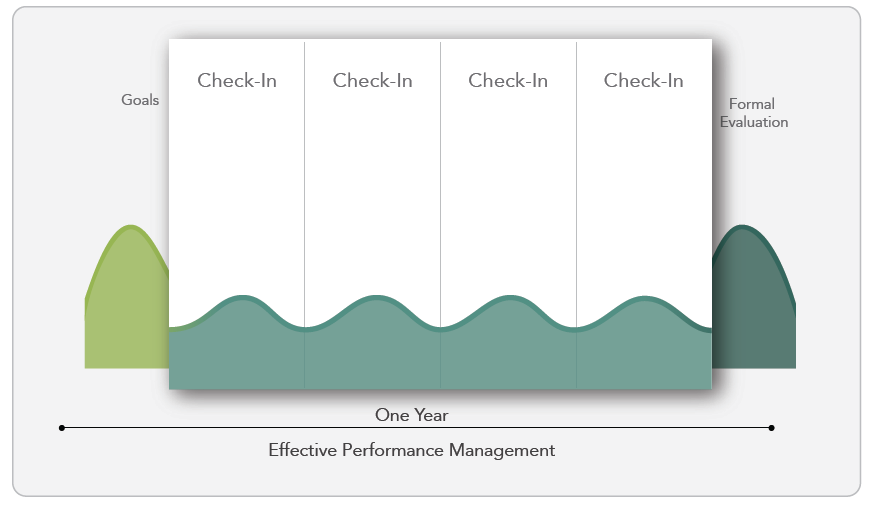
The ideal frequency of check-in discussions depends upon the work and how often you interact with your manager. Ongoing check-in conversations around goals should happen at least every 2 months. Note that if you meet more often to discuss day-to-day work and development, you can incorporate goal conversations into your existing meetings.
01
DISCUSS ROLES AND RESPONSIBILITIES FOR CHECK-INS
Early in the performance review cycle, take time to discuss what you and your manager are each responsible for during check-in meetings. Clarifying roles and expectations up front helps ensure these conversations are productive and shared. If either of you hasn’t been fully owning your role in check-ins, this is a good topic to raise in your next meeting.
| Manager Role | Employee Role |
|---|---|
| Clarify the purpose and frequency of the check-ins. | Ask questions. |
| Define what success looks like. | Be proactive when work seems misaligned with broader goals. |
| Clarify how employee’s work contributes to the big picture. | Seek, accept, and act on feedback. |
| Bring goals and expectations for both results and behaviors into regular feedback and coaching conversations. | Take ownership of your own career and development – set goals, seek opportunities, ask for guidance when needed. |
!
Be clear about each role in check-ins. If either person is not doing their part, address this directly. A common trap for managers is to take on responsibility for the employee’s role.
02
REVIEW AND UPDATE GOALS
Ongoing check-ins by design are centered on goals.
Start the conversation by reviewing goals:
- Discuss updates, which could include progress since the last check-in, changes to resources or timelines that impact the goal, along with additional information or questions.
- Be sure to re-affirm and discuss how individual projects and assignments fit into the bigger picture.
If priorities shift, set new goals or update existing goals to reflect the change. Discuss the
following questions:
- How does this project or assignment fit into your annual goals? If it does not, discuss why it makes sense to take on this project or assignment.
- What does success look like with regard to the goals?
- What job competencies will be most important for success?
03
EVALUATE CURRENT PROGRESS TO SUPPORT PERFORMANCE AND DEVELOPMENT
Use check-in meetings to talk with your manager about how you’re progressing toward your goals. This doesn’t need to be a formal evaluation; instead, focus on sharing observations and feedback. Discuss what’s working, what may need adjustment, and incorporate input from others as well as updates you and your manager have shared along the way.
Is the feedback and coaching you receive effective?
- Consider your level of self-awareness and motivation to learn from feedback and coaching. If you are not self-aware or motivated, address this first.
- Consider whether new skill training would be helpful.
- Reflect on what is going well? What can be done better?
- Discuss opportunities for you to apply and master skills through projects and assignments.
04
DETERMINE NEXT STEPS
Determine
What support do you need to complete your work (additional information,
resources, skills, training, opportunities to practice, etc.)?
Discuss
Agree on next steps for the work, for your development, and for your
future check-ins.
Document
Take a note of this information as reference for future check-ins, especially since it will help inform the formal evaluation at the end of the year.